
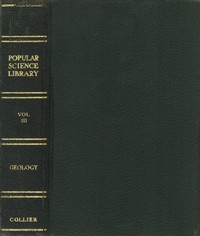
Geology: The Science of the Earth's Crust by William J. Miller
Let's be honest: 'Geology' as a title might make you think of a heavy textbook. William J. Miller's book is something else entirely. It's an invitation. Written with clarity and a genuine desire to share, it's a foundational tour of what makes our planet's outer shell tick.
The Story
There's no fictional plot here, but there is a fantastic narrative: the story of the Earth itself. Miller walks you through the basics of the Earth's crust, explaining how it's put together and the powerful forces that constantly reshape it. He talks about the different types of rocks—not just what they are, but the journeys they've been on. He explains how mountains are built from colossal collisions and how valleys are carved by patient rivers and glaciers. He deciphers the clues left behind in rock layers, showing how geologists piece together Earth's long history like detectives solving a very cold case. The 'story' is one of constant change, written in a language of stone, pressure, and time.
Why You Should Read It
I loved this book because it gives you a new pair of eyes. Miller has a gift for making complex ideas accessible. Reading it feels less like studying and more like having a patient expert point out fascinating details on a hike. You get a sense of the immense scale of geological time and the powerful, slow-motion drama of plate tectonics, erosion, and uplift. It fosters a deep sense of curiosity about ordinary landscapes. After reading a chapter on sedimentary layers, I found myself looking at a roadside cut completely differently—it wasn't just dirt; it was a historical record. The book builds a framework for understanding the physical world, which is incredibly satisfying.
Final Verdict
This is the perfect book for the naturally curious person who has no formal science background but looks at a mountain range and thinks, 'How did that get there?' It's for hikers, travelers, gardeners, and anyone who wants to understand the stage on which human history plays out. If you enjoy authors like John McPhee who make science lyrical, you'll appreciate Miller's clear and engaging style. It's a classic for a reason—it turns the ground beneath us from a backdrop into the main character of an epic story.
This content is free to share and distribute. Distribute this work to help spread literacy.
Matthew Miller
1 year agoHelped me clear up some confusion on the topic.
Emma Jackson
1 year agoI have to admit, the narrative structure is incredibly compelling. A valuable addition to my collection.








Brian Torres
1 year agoHelped me clear up some confusion on the topic.