
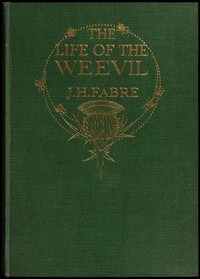
The Life of the Weevil by Jean-Henri Fabre and Alexander Teixeira de Mattos
Let's clear something up first: this is not a plot-driven novel. There's no villain or love story, at least not in the human sense. The 'story' is the life cycle of a family of beetles, as witnessed by one of history's most patient and curious observers, Jean-Henri Fabre.
The Story
Fabre, often called the 'Homer of Insects,' dedicates himself to understanding the weevil. He follows them from egg to adult, documenting their behaviors with the care of a biographer. He watches a mother weevil drill a perfect hole in an acorn to lay a single egg. He observes the grub that hatches, eating its furnished home in a way that won't cause a collapse. He tracks the adults as they navigate by smell and instinct. The narrative is built from these small, meticulous observations. The drama is in the survival: a wrong turn means death, a successful hatch is a triumph. Alexander Teixeira de Mattos translates Fabre's original French work, preserving the author's wonder and lyrical style, making the science feel like a series of short, nature documentaries on the page.
Why You Should Read It
I picked this up on a whim and was stunned by how absorbing it was. Fabre's voice is key. He's not a distant scientist; he's a guy in his yard, getting excited about a beetle's parenting skills. His enthusiasm is contagious. You start to see the weevil not as a pest, but as an expert in its field (literally). The book slows you down. In our fast-paced world, there's something deeply calming about reading how a creature spends two days carefully preparing a nursery for its offspring. It’s a masterclass in attention and a reminder that profound complexity exists in the smallest packages. It made me appreciate the quiet intelligence of nature.
Final Verdict
Perfect for curious minds, garden lovers, or anyone feeling a bit disconnected from the natural world. If you enjoyed Braiding Sweetgrass or the quiet observations in The Hidden Life of Trees, you'll find a kindred spirit in Fabre. It's also great for readers who like non-fiction that tells a story. You don't need a science background—just a little patience and a sense of wonder. This book is a gentle, brilliant invitation to look closer.
This title is part of the public domain archive. Preserving history for future generations.
Mason Lewis
5 months agoA must-have for anyone studying this subject.

Lucas Williams
1 year agoRecommended.